Marvel Rivals hardstuck claims fall apart when a Grandmaster player reviews the actual gameplay
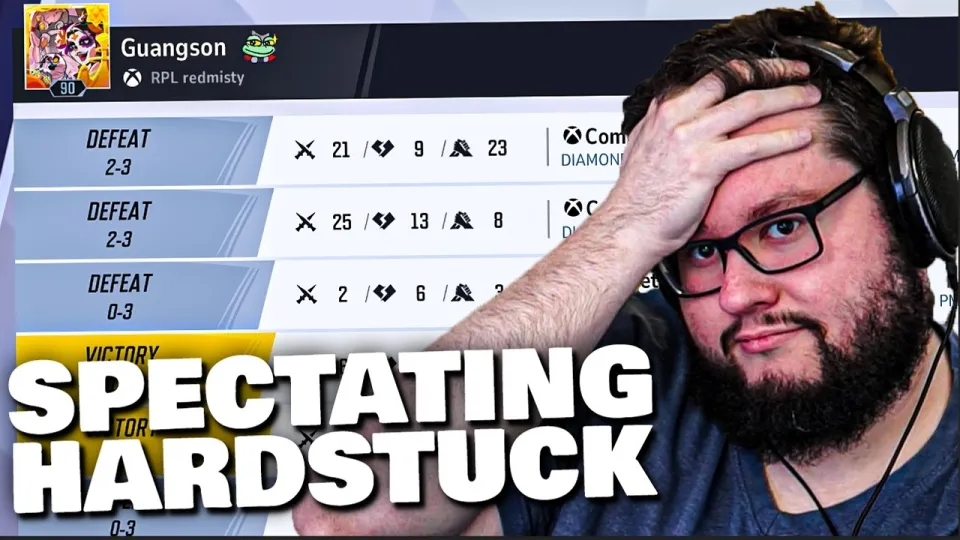
Video: I Spectated Someone Who Claimed To Be Hardstuck In Marvel Rivals
Want articles like this for your own video to promote it on YouTube and Google? Order them through the Telegram bot @sat_sit_bot. It writes articles around your video, embeds the video and publishes them on popular niche websites (no ads). Free trial — 50 articles.
· based on the channel Flats
Key takeaways
- Flats spectated a Marvel Rivals player who insisted his rank was the fault of teammates, not his own play.
- The reviewed account sat in Grandmaster, which made the basic mistakes in positioning and cooldown usage stand out even more.
- The player described himself as a Spider-Man main, a detail viewers tied directly to his refusal to take accountability.
- A Cloak & Dagger played as Dagger with the Cloak half ignored became the most repeated criticism of the session.
- The review showed the player walking past a health pack while searching for one, and wasting an invisibility cooldown with no follow-up plan.
If you are hardstuck in Marvel Rivals, the fastest way to find out why is to have a stronger player watch your matches instead of your scoreboard. That is exactly what happened when Flats spectated a viewer who blamed his rank on teammates, and the review turned into a catalogue of fixable mistakes: cooldowns burned with no plan, health packs walked past, and a support pick played at half its kit. You can watch Flats review matches live and ask your own questions on his Twitch channel.
What the Marvel Rivals hardstuck spectate actually revealed
The session followed a familiar format: a player submits a match, insists the losses are not his fault, and the reviewer pauses to explain what a better player would have done. In this case the account was sitting in Grandmaster, which raised the stakes of every error, because the habits on display were the kind that normally get punished long before that rank. The player framed himself as a Spider-Man main, and the dive-heavy mindset showed in how he treated positioning and escape tools.
The recurring theme was accountability. Nothing in the review suggested the teammates were flawless; the point was that the player had no plan for his own resources. Abilities went out on cooldown rather than on purpose, engagements started without an exit, and the blame landed on the team after every death. That gap between self-image and execution is what keeps a player parked at the same rank across dozens of games.
The Cloak & Dagger problem at the center of the review
The most repeated criticism of the session was that the player was effectively playing half a hero. Cloak & Dagger is a two-form support, and the review showed the Dagger side doing the healing while the Cloak side sat largely unused, which removes the escape, the damage window and the utility that make the pick strong in the first place.
What a functional Cloak & Dagger rotation looks like in practice:
- Heal from Dagger's primary fire and keep the healing wall available for the moment a tank commits, not for chip damage.
- Swap to Cloak when a diver closes in, use the dark teleportation field to break line of sight, then return to Dagger to resume healing.
- Save the blinding veil for enemy ultimates or for a push through a choke, rather than tossing it at full health targets.
- Track the ultimate as a team-fight tool and announce it before using it, so the frontline can move with it.
Ignoring one half of the kit means the player is effectively running a weaker healer with no self-peel, then wondering why flankers keep winning the duel.
Positioning mistakes that keep players stuck in Marvel Rivals
Positioning was the second pillar of the review, and it produced the detail viewers found funniest: the player walked straight past a health pack while clearly looking for healing. That single moment summarizes a larger issue, which is that the player was not tracking the map around him, only the fight in front of him.
Common positioning failures the spectate highlighted:
- Holding a forward angle as a support with no cover and no escape cooldown available.
- Retreating toward the enemy spawn instead of toward the team's own backline when a fight collapses.
- Taking a duel in the open against a hero built for close range, then blaming the damage numbers.
- Using mobility to enter a fight but never reserving it to leave.
In Marvel Rivals the map geometry matters as much as the hero pick, because health packs, high ground and chokes decide who survives a second engagement. A player who does not know where the nearest pack is will always feel like healing is out of reach.
Why ego and inflated ranks are a recurring Marvel Rivals complaint
Experienced players watching the session kept returning to the same frustration: players with strong opinions and weak fundamentals climbing on a negative win rate. Marvel Rivals uses a ranked system where consistent play is rewarded, so a player can drift upward on volume and performance bonuses even while losing more than he wins, and that cushion hides bad habits.
The result is a Grandmaster lobby where basic cooldown discipline is missing. That mismatch is what makes the review useful rather than cruel: it shows that rank is not proof of understanding, and that the same player would climb faster by fixing three habits than by grinding another hundred matches. The ego piece matters too, because a player who opens every review with an excuse never hears the feedback.
Typical viewer questions about the hardstuck spectate
Viewers came away with two competing reactions. Some saw proof that teammates really can hold you back, just not in the way the player intended; others wanted the account on the enemy team in every match they ever play. Both reactions point at the same lesson about sample size and self-assessment.
The practical questions that came up again and again:
- Is the rank itself the problem? No. The rank is a symptom. The review found errors that would be corrected at any level once someone pointed them out.
- Does a negative win rate mean you cannot climb? Volume and performance bonuses can carry a player upward, but that cushion disappears once opponents punish the same mistakes consistently.
- Should a Spider-Man main switch heroes? Not necessarily. The dive playstyle is viable; the issue is engaging without an escape route and then blaming the support line.
- How do you review your own matches? Watch one loss at a time, pause on every death and name the resource you wasted. That single habit replaces an hour of ranked grinding.
Where to follow Flats and his Marvel Rivals breakdowns
Flats built his audience on Overwatch coaching and carried the same review format into Marvel Rivals, which is why the spectates feel like lessons rather than highlight reels. The channel runs on audience submissions, so the fastest way to get your own gameplay picked apart is to be present when matches are reviewed.
All the official links from the video:
The takeaway from this Marvel Rivals spectate
The hardstuck label in Marvel Rivals usually describes a player who has stopped reviewing his own decisions. This session made the case clearly: a Grandmaster account, a support played at half strength, cooldowns spent without purpose and a health pack ignored at close range. None of those problems require a new hero or a new team, only a short list of habits to fix one at a time. Flats is the author of the breakdown, and his channel is the place to see the same review applied to hundreds of submissions. If you want your own match dissected, join the live stream on Twitch and submit your replay.
Questions & answers
Why do players say they are hardstuck in Marvel Rivals when they keep climbing?
Ranked systems reward consistent play through volume and performance bonuses, so an account can move up even with a losing record. That cushion hides mistakes like wasted cooldowns and poor positioning until opponents start punishing them every game. The rank rises, but the fundamentals do not.
Is Cloak & Dagger viable if you mostly stay in Dagger form?
It works only as a weaker healer. The Cloak form supplies the escape, the blinding utility and the damage window that make the pick strong against divers. A player who never swaps is giving up half the kit and has no answer when a flanker arrives.
Do teammates actually hold you back in Marvel Rivals?
Sometimes, but the useful question is what you could have done differently in the same fight. In this review the player had no escape plan, ignored nearby healing and burned utility without a follow-up. Fixing those three things changes more matches than any teammate swap.
How can I review my own Marvel Rivals gameplay without a coach?
Record one loss and pause on every death. For each one, name the cooldown you wasted, the cover you skipped and the route you should have taken. Ten minutes of that is worth more than an hour of ranked grinding, and it makes a coaching session far more productive later.
Source: I Spectated Someone Who Claimed To Be Hardstuck In Marvel Rivals · Markdown version